
Originally published: March 2, 2022 | Updated June 24, 2026
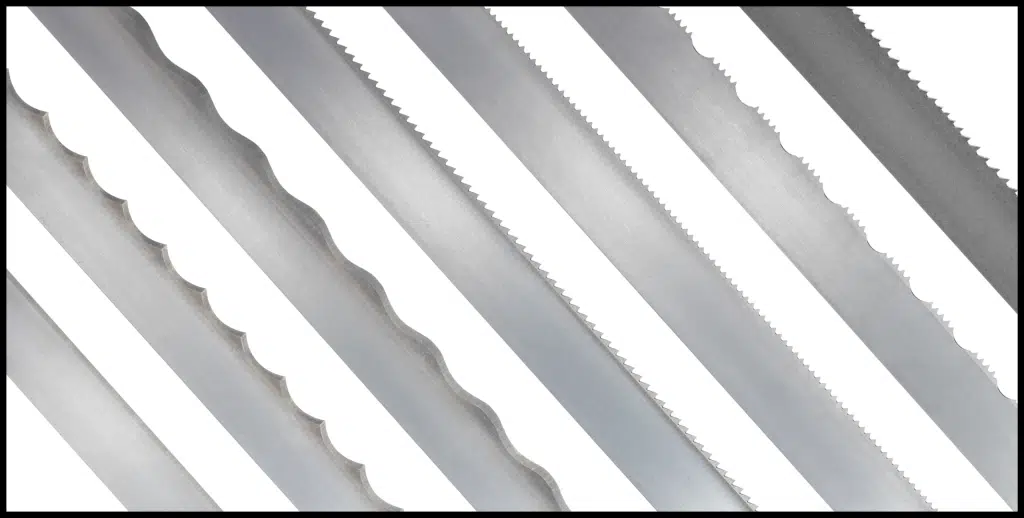
Your blades can have a significant impact on your operation’s productivity, product quality, and overall operating costs. The right blade helps produce cleaner cuts, reduce material waste, extend blade life, and minimize machine downtime. Conversely, choosing the wrong blade can lead to premature wear, inconsistent cut quality, excessive waste, and unnecessary maintenance.
Unfortunately, there isn’t a single “perfect” blade that excels in every application. Different materials require different edge types or even steel compositions, and factors such as material density, desired finish, cutting speed, machine type, and production volume all influence which blade will perform best.
At Simmons, we’ve spent 80 years helping customers identify the ideal blade for their industrial cutting applications. This guide explains the different categories of blades, what sets them apart from each other, and where each excels, ultimately making it easier to select the best blade for your operation.
Understanding the Three Main Types of Blades
Before comparing specific blade styles, it’s helpful to understand the three primary categories of blades for industrial applications. Each is designed with a different cutting action in mind and performs best under specific conditions.
Slicing Blades
Slicing blades feature sharpened edges rather than traditional saw teeth. Instead of aggressively tearing through material, they smoothly slice through the product, providing exceptionally clean finishes without creating dust.
These blades are ideal for soft materials and applications where product appearance, precision, and yield are critical.
Typical applications include:
- Foam fabrication
- Flexible packaging materials
- Fabric and textiles
- Insulation materials
- Latex
If achieving the smoothest possible finish is your highest priority, a slicing blade is typically the best place to start.
Cutting Blades
When a slicing blade isn’t aggressive enough, the next step is often a cutting blade.
Cutting blades feature beveled teeth without set, allowing them to penetrate into material more aggressively while still maintaining relatively clean cuts. They offer an excellent balance between cutting speed and finished product quality, making them particularly effective for medium-density materials.
Because these blades remove very little material during the cutting process, they generally create less dust than traditional saw blades.
Typical applications include:
- Medium-density foam
- Polyethylene foam
- Abrasive products
Saw Blades
When working with dense materials such as wood, metal, bone, or rigid industrial products, you’ll need a true saw blade.
Unlike slicing and cutting blades, saw blades incorporate teeth with set, allowing them to remove material efficiently while penetrating much harder products. Their more aggressive cutting action makes them ideal for heavy-duty industrial environments where durability is essential.
Common applications include:
- Metal
- Wood
- Rigid foam products
- Cardboard
- Structural materials
Because saw blades experience significantly greater cutting forces, selecting the proper tooth size, set, and blade composition becomes especially important for maximizing blade life and cut quality.
Slicing Blades
When achieving the cleanest possible cut is your highest priority, slicing blades are typically the best solution.
Unlike toothed blades that remove material as they cut, slicing blades rely on razor-sharp edges to smoothly enter the product. They’re commonly used throughout industries where appearance, precision, and product yield are critical.
At Simmons, we manufacture several slicing blade styles, each designed to address specific cutting challenges.
Knife Edge Blades
If your application demands the smoothest finish available, a Knife Edge blade is often the best place to start.
With its finely sharpened edge, the Knife Edge blade slices cleanly through soft materials. The result is an exceptionally smooth finish without product loss, making it an excellent choice when consistent product quality is a top priority.
Because of their versatility, Knife Edge blades are used across a wide range of industries to slice, peel, and trim products that require precision cutting.
Knife Edge blades are commonly used for:
- Low-density foams
- Flexible packaging materials
- Textile and fabric cutting
- Rubber
- Insulation material
- Other low-density, flexible materials
To maximize blade life, Knife Edge blades should be paired with grinding wheels specifically matched to the blade’s steel type and intended application. Proper sharpening helps maintain the blade’s razor-sharp edge while extending service life.
Click here to learn more about Knife Edge blades.
Scallop Blades
If a standard Knife Edge blade isn’t entering your product smoothly, a Scallop blade is often the next logical step.
Scallop blades feature individually ground scallops that easily penetrate the product to allow for smooth slicing action that still maintains the clean finish expected from a slicing blade. This cutting action minimizes tearing, reduces material waste, and produces a cleaner finish, making slicing blades the preferred choice for many low to medium-density materials.
Its unique edge geometry allows operators to increase cutting efficiency while avoiding the excessive waste or rough finish often associated with more aggressive blade designs.
Scallop blades are especially popular when cutting:
- Low to medium-density foams
- Insulation material
- Packaging film and coil
- Flexible packaging materials
- Fiberglass
- Rubber
Each Simmons Scallop blade is individually ground to precise specifications, ensuring consistent cutting performance from blade to blade. Available in both premium carbon steel and stainless steel, these blades deliver excellent durability while maintaining their razor-sharp cutting edge.
Click here to learn more about Scallop blades.
Wavy Blades
Certain materials require a blade capable of slicing cleanly without snagging or pulling individual fibers. That’s exactly where Wavy blades excel.
Wavy blades utilize razor-sharp crests that smoothly slice through fibrous materials. This cutting action produces a cleaner finish than many conventional toothed blades. This results in a blade that’s particularly effective with lightweight materials that can be difficult to cut cleanly with more aggressive edge designs.
Wavy blades perform exceptionally well when cutting:
- Low-density foams
- Foam-rubber products
- Fabric/Textiles
- Fibrous insulation
- Filter media
- Similar lightweight materials
Click here to learn more about Wavy blades.
Taking It Up a Notch
If your material requires even greater penetration than a slicing blade can provide, the next category to consider is a cutting blade. These blades feature specially designed teeth that increase cutting efficiency while still maintaining excellent product quality and minimizing waste.
Cutting Blades
As material density increases, a slicing blade may struggle to retain the razor-sharp edge needed to slice cleanly through your material.
Unlike slicing blades, cutting blades feature teeth without set. This allows them to bite into the material more effectively while still producing a relatively clean cut. It also extends blade life because the teeth continue to cut through material once the sharp edge dulls during normal use.
Because cutting blades remove very little material during the cutting process, they also generate less dust and waste than many saw blades. This makes them especially popular in foam fabrication and other applications where product yield, cleanliness, and efficiency all matter.
If you’re looking for faster cutting speeds without sacrificing cut quality, a cutting blade is often the right choice.
V-Tooth Blades
The V-Tooth features sharp, evenly spaced teeth that quickly penetrate material while producing minimal waste. It’s one of the most versatile edge styles in Simmons’ lineup and is a great starting point for many foam fabrication applications.
Unlike sharpened slicing blades, V-Tooth blades don’t require an integrated sharpening or grinding system on your machine. That can simplify maintenance while helping reduce overall operating costs.
V-Tooth blades are frequently used for cutting:
- Medium to high-density foam products
- Packaging materials
- Plastic film
- Aluminum honeycomb
Click here to learn more about V-Tooth blades.
C-Tooth Blades
When working with more firm/dense materials such as polyethylene or ethylene-vinyl acetate (EVA) foams used in shipping cases, moving up to a C-Tooth blade can significantly improve cutting performance.
Compared to the V-Tooth blade, C-Tooth blades feature a more aggressive tooth profile designed to enter the material quickly while maintaining a clean, controlled cut. An added benefit is the blade’s ability to run in the opposite direction when a gentler slicing action is preferred, giving operators greater flexibility for varying production requirements.
C-Tooth blades excel when cutting:
- Medium to high-density foam
- Packaging materials
- Contour cutting
- Dense insulation materials
Click here to learn more about C-Tooth blades.
Razorback Blades
The Razorback blade combines two of Simmons’ most successful blade designs by integrating the cutting action of a V-Tooth blade with the smooth slicing characteristics of a Scallop blade. The result is a hybrid edge that offers exceptional versatility.
Its unique design penetrates medium-density materials more effectively than traditional slicing blades while generating less material waste than more aggressive cutting blades. This balance of speed and finish quality has made the Razorback blade one of Simmons’ most popular blade styles within the foam fabrication industry.
The Razorback is ideal for:
- Medium-density foams
- High-density foams
- Contour cutting
Click here to learn more about Razorback blades.
When It’s Time to Get Aggressive
If your application involves materials such as rigid foam, wood, or metal, even the most aggressive cutting blade may not provide the performance you need.
In those cases, it’s time to move up to a saw blade.
Saw Blades
Unlike slicing and cutting blades, saw blades feature teeth with set, meaning the teeth are alternately bent to each side of the blade. This creates a wider kerf, allowing the blade to remove material more efficiently while reducing friction during the cut.
Whether you’re cutting wood, sawing metal, or working with rigid industrial materials, selecting the proper saw blade can significantly improve productivity, blade life, and cost per cut.
At Simmons, we offer a variety of saw blade styles engineered to meet the demands of everything from general-purpose cutting to the most challenging industrial applications.
Flexback Blades
If versatility is your priority, the Flexback blade is an excellent choice.
Manufactured from premium high-carbon steel with individually hardened tooth tips, Flexback blades combine excellent cutting performance with outstanding fatigue resistance. Their flexible backing allows them to withstand repeated bending, making them ideal for applications involving contour cuts, radius cuts, or machines that place higher stress on the blade.
Flexback blades are commonly used for cutting:
- Rigid foam
- Wood products
- Non-ferrous metals
- Honeycomb composites
Click here to learn more about Flexback blades.
Hardback Blades
When maximum beam strength and straight cutting performance are required, the Hardback blade is often the better choice.
Like the Flexback blade, Hardback blades are manufactured from premium high-carbon steel with hardened tooth tips. However, their hardened backing allows the blade to operate under greater tension, helping it maintain exceptional straightness throughout the cut.
That added rigidity makes Hardback blades particularly well suited for applications where cut accuracy is more important than flexibility.
Hardback blades perform exceptionally well when cutting:
- Rigid foam
- Wood products
- Non-ferrous metals
Simcor Blades
Some applications require the cutting power of a saw blade while still minimizing material waste. The Simcor blade was designed to meet that challenge.
Featuring a modified 10 TPI C-Tooth profile with a lighter tooth set than most carbon steel saw blades, Simcor blades cut aggressively while removing less material than many traditional saw blades.
Combined with a hardened cutting edge, this unique tooth geometry allows Simcor blades to deliver fast, efficient cutting without sacrificing product yield.
Simcor blades are ideal for:
- High-density foam
- Dense packaging materials
- Bone and tissue processing
Click here to learn more about Simcor blades.
Bi-Metal M42 Blades
When cutting metal, blade durability becomes just as important as cutting performance. Fortunately for all metal cutters, Simmons’ Bi-Metal M42 blades are specifically engineered for these demanding applications.
Manufactured with a durable 4% chromium alloy backing and premium M42 high-speed steel tooth tips, these blades are built to withstand the extreme heat, pressure, and wear generated by high-production metal cutting operations.
Compared to standard carbon steel blades, Bi-Metal M42 blades typically last three to four times longer, which reduces blade changes, minimizes machine downtime, and lowers your overall cost per cut.
Bi-Metal M42 blades are commonly used for cutting:
- Carbon steel
- Stainless steel
- Space age alloys
- Tool steel
- Hard woods
- Pallets
Click here to learn more about Bi-Metal M42 blades.
Honeycomb Blades
Open-cell materials present unique cutting challenges.
Traditional saw blades can easily tear, distort, or damage fragile cellular structures, resulting in poor surface quality and unnecessary waste.
Honeycomb blades solve this problem through a unique tooth design intended to cut with the teeth facing backward. Alternating bevels on the back of each tooth allow the blade to cut aggressively while preserving delicate material structures, producing exceptionally clean, “fuzz-free” finishes.
These saw blades are also available without set, which can be impactful when working with lightweight honeycomb materials.
Honeycomb blades are commonly used for:
- Aerospace panels
- Honeycomb made with paper, composite, aluminum, or other materials
- Lightweight cellular products
- Packaging materials
Click here to learn more about Honeycomb blades.
Need Help Choosing the Right Blade?
Every cutting application is unique.
The type of material you’re processing, your production goals, machine specifications, desired finish, and operating environment all influence which blade will deliver the best results. That’s why selecting the right blade for your industrial cutting application isn’t always as straightforward as choosing the most aggressive edge or the highest-quality steel.
Fortunately, you don’t have to make that decision alone.
For more than 80 years, Simmons has helped manufacturers with industrial applications optimize their cutting operations. Our experienced Regional Sales Managers work directly with customers to recommend the ideal blade, troubleshoot cutting challenges, and improve overall cutting performance.
Whether you’re looking to increase blade life, improve product yield, reduce waste, or simply identify a better-performing replacement for your current blade, we’re here to help.
Contact Simmons today to speak with a blade expert, request a quote, or discuss your application. Together, we’ll help you find the right blade for your cutting operations.


 English
  Spanish