
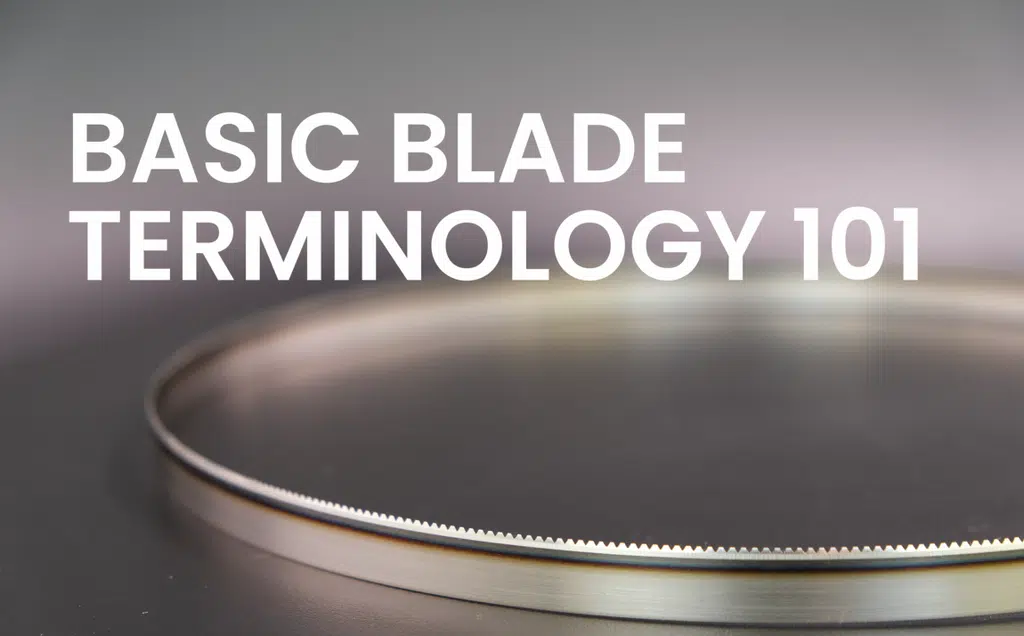
Choosing the right blade for an application starts with understanding basic blade terminology. Terms such as width, thickness, pitch, TPI, gullet, and bevels are commonly used when specifying or ordering industrial blades, but knowing what each measurement means can help you make more informed decisions about your cutting application.
In this guide, we’ll explain some of the most common blade terminology and what each specification means.
Blade Width
Blade width is the distance from the tip of the cutting edge or tooth to the back of the blade.
Blade width is an important consideration when selecting a blade because the appropriate width can depend on the type of machine you’re using and/or your cutting application.
For bandsaw blades, width is typically specified along with thickness and length to ensure the blade is compatible with the machine.
Blade Thickness
Blade thickness refers to the physical thickness of the blade’s steel, measured from one side of the blade to the other.
Blade thickness can affect the blade’s strength, flexibility, and performance during cutting. When ordering a replacement blade, it’s important to match blade thickness to the specifications recommended for your specific machine and application.
Blade Length
Blade length refers to the total length of a blade.
Unlike width and thickness, blade length is generally determined by your specific bandsaw machine. Different machines require different blade lengths, so knowing the machine’s blade length specification is essential when ordering a replacement blade.
Gullet
The gullet is the space between two teeth, measured from the tooth tip to the bottom of the cutting edge.
The gullet provides space for material to collect as the blade moves through the cut. Its size and shape can influence how efficiently material is removed from the cut.
Pitch
Pitch is the distance from one tooth tip to the next.
A blade with a smaller pitch has teeth that are closer together, while a blade with a larger pitch has teeth that are spaced farther apart.
The appropriate pitch for your cutting application depends on factors such as the type of material being cut, the thickness of the material, and your desired cutting performance.
TPI: Teeth Per Inch
TPI stands for Teeth Per Inch and refers to the number of teeth within one inch of the blade.
TPI is closely related to pitch. In general, a higher TPI means the teeth are more closely spaced, while a lower TPI means the teeth are spaced farther apart.
Selecting the right number of TPI is crucial to achieve your desired cutting performance. The right number of teeth engaging the material during a cut can help influence cut quality, cutting speed, and overall blade performance.
Bevels
Bevels are the angled grinds on the face or top of a blade’s edge or teeth.
The angle and design of the bevel can influence how the blade enters and moves through the material. Manufacturers like Simmons can provide custom bevel configurations depending on the material being cut and your desired surface finish.
Why Blade Terminology Matters
Understanding these basic terms can make it easier to communicate with a blade manufacturer and identify the right blade for your application.
When discussing a blade, specifications such as width, thickness, length, pitch, TPI, gullet, and bevel provide important information about the blade’s physical characteristics and cutting geometry.
However, blade selection involves more than simply matching dimensions. The material being cut, the type of machine you’re using, cutting conditions, and desired finish can all influence which blade is best suited for the job.
If you’re unsure which blade specifications are right for your cutting application, working with an experienced blade manufacturer can help you find the solution that best suits your needs.
Learn More About Blade Terminology
At Simmons Knife & Saw, we provide cutting solutions for a wide range of applications and industries. Our team can help you identify the blade specifications that best fit your equipment and cutting requirements.
Have questions about selecting the right blade? Contact Simmons Knife & Saw to discuss your application.



 English
  Spanish