Simmons Knife & SawSimmons Knife & Saw

  • LAR
  • INDÚSTRIAS
    • LÂMINAS DE CORTE DE ESPUMA
    • LÂMINAS PARA CORTE DE CARNE
    • LÂMINAS DE CORTE PARA PRODUÇÃO
    • LÂMINAS PARA FATIAR PÃO
    • FACAS DE EMBALAGEM
    • LÂMINAS PARA DIVIDIR COURO
    • LÂMINAS DE CORTE DE METAL
    • LÂMINAS PARA CORTE DE MADEIRA
    • MAIS LÂMINAS DE CORTE
  • SOBRE NÓS
    • NOSSA EQUIPE
    • NOSSA HISTÓRIA
    • O VALOR DE SIMMONS
    • SIMMONS MUNDIAL
    • CARREIRAS
    • CONDIÇÕES DE VENDA E COMPRA
    • POLÍTICA DE PRIVACIDADE
  • PRODUTOS
    • Lâminas Apex
    • Lâminas B-3
    • Lâminas bimetálicas M42
    • LÂMINAS PARA FATIAR PÃO
    • LÂMINAS DE AÇOUGUEIRO
    • Lâminas para carcaça DuraSplit de açougueiro
    • Lâminas C-TOOTH
    • Lâminas de grão de carboneto
    • LÂMINAS COM PONTA DE CARBETO
    • Lâminas CNC
    • Lâminas afiadas na garganta
    • LÂMINAS FLEXBACK
    • LÂMINAS DE BANDA DE MÓVEIS
    • LÂMINAS PARA FATIAR ALIMENTOS
    • LÂMINAS DE CAPA DURA
    • LÂMINAS EM FORMATO DE COLMEIA
    • LÂMINAS DE FACA – ESTREITAS
    • LÂMINAS DE FACA – LARGAS
    • Lâminas Razorback
    • Lâminas de vieira
    • FACAS PARA PROCESSAMENTO DE FRUTOS DO MAR
    • SIMCOR® LÂMINAS
    • LÂMINAS ESPECIAIS COM ENTALHE
    • LÂMINAS PARA PROCESSAMENTO DE TECIDOS
    • LÂMINAS COM DENTES EM V
    • LÂMINAS ONDULADAS
    • LÂMINAS DE ARAME
    • Discos de desbaste e acessórios
    • FACAS DE EMBALAGEM – MÁQUINAS DE SELAGEM DE COPOS E BANDEJAS
    • FACAS DE EMBALAGEM – MÁQUINAS HORIZONTAIS DE FORMAÇÃO, ENCHIMENTO E SELAGEM
    • FACAS DE EMBALAGEM – MÁQUINAS DE EMBALAGEM A VÁCUO
    • FACAS DE EMBALAGEM – MÁQUINAS VERTICAIS DE FORMAÇÃO, ENCHIMENTO E SELAGEM
    • FACAS DE EMBALAGEM – SELADORAS DE CAIXAS
  • SOLICITE UM ORÇAMENTO
  • NOTÍCIAS E OPINIÕES
  • CONTATE-NOS
    • CONTATE-NOS
    • BOLETIM INFORMATIVO

The Importance of Blade Tension

by SIMMONS / 22 abril 2022 / Published in Blade Tips

While it may not seem important at first, the extent to which you tension your bandknife or bandsaw blades can literally make or break your finished product. That’s why it’s imperative to properly apply blade tension before you run it on a bandsaw and look out for signs of under or over tensioning while it’s in use.  

If you’ve ordered a new bandsaw, the manufacturer will typically set the blade tension for you. However, if you’re tensioning the blade yourself, then you should know there are two ways to go about it: manually or automatically. 

MANUAL BLADE TENSIONING

Manual tension can be applied by springs or spring washers. However, the washers and/or springs will eventually collapse over time. This will cause the blade to overtighten and usually results in premature blade breakage. If this occurs, Simmons strongly recommends contacting the machine manufacturer for replacement parts and correct settings for the tension. 

AUTOMATIC BLADE TENSIONING

Automatic tensioning is applied through a pneumatic cylinder (air over oil). This tensioning method tightens the blade to a pre-determined level, which can usually be read off a dial indicator. Normally, automatic tensioning is very consistent. However, low air pressure or water in the air system can affect it.

No matter the method, after you tension your blades, you should look out for the following signs during normal cutting operations.

SIGNS OF AN OVER TENSIONED BLADE

  • Hairline cracks develop in the gullet of toothed blades.
  • Hairline cracks develop on the back edge of the blade.
  • Premature blade breakage, typically a straight break.

SIGNS OF AN UNDER TENSIONED BLADE

  • The blade is not cutting straight.
  • The blade is leaving marks or shadows on the material being cut.

To recap, consistently and properly tensioning your blades will reduce the risk of premature blade breakage and ensure your blades run smoothly until the end of their natural life. Simmons’ blades (depending on the width and thickness) are made to withstand a blade tension range of 16,000 – 21,000 PSI. Feel free to use that as a guideline. However, to confirm you’re getting consistent tension readings, you should measure tension during each installation of a new blade on your bandsaw machinery.

Want to get extremely accurate blade tension readings in a cinch? Contact Simmons today to try one of our tension meters!  
Contact Us
Tagged under: Blade Tension, Blade Tips

What you can read next

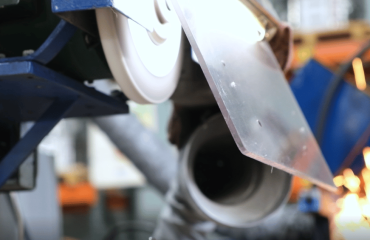
A Simmons grinding wheel runs at high speed while sparks fly in the background.
Grinding Wheel Best Practices – How to Perform a Ring Test
5 things to look for in a bandsaw blade manufacturer.
5 Things to Look for in a Bandsaw Blade Manufacturer
Troubleshooting Common Bandsaw Blade Issues

Categories

  • About Simmons
  • Blade Tips
  • News
  • Simmons Gives Back
  • Uncategorized

Recent Posts

  • Simmons Knife & Saw Celebrates 80 Years of Manufacturing Industrial Cutting Solutions

    Glendale Heights, IL — [April 1, 2026] Simmons ...
  • SimCut Butcher Bandsaw Blades: Choosing the Right Blade for Bone-In Meat Cutting

    If your operation involves cutting bone-in meat...
  • Food Processing Blades for Meat Cutting & Slicing | Simmons’ Complete Guide

    The food processing industry is one of the larg...
  • What to Expect from Simmons in 2026: Maintaining Momentum and Celebrating Milestones

    With both feet now firmly planted in 2026, I be...
  • 2025 Year-In-Review: Simmons’ Record-Setting Year

    As 2025 draws to a close, I’m proud to say this...

Simmons' 80th Anniversary Logo

  • INDÚSTRIAS
  • SOBRE NÓS
  • PRODUTOS
  • SOLICITE UM ORÇAMENTO
  • NOTÍCIAS E OPINIÕES
  • CONTATE-NOS

400 Regency Drive, Glendale Heights, IL 60139 |  E-mail: vendas@simcut.com |  Número de telefone: +1.630.912.2880

400 Regency Drive, Glendale Heights, IL 60139
E-mail: vendas@simcut.com
Número de telefone: +1.630.912.2880

©2022 SIMMONS KNIFE & SAW. Todos os direitos reservados.
Nenhuma imagem pode ser utilizada, reproduzida ou transmitida de qualquer forma ou por qualquer meio sem a prévia autorização por escrito da Simmons Knife & Saw.

PRINCIPAL
pt_BRPortuguese (Brazil)
en_USEnglish es_MXSpanish it_ITItalian de_DEGerman fr_FRFrench pt_PTPortuguese (Portugal) pt_BRPortuguese (Brazil)