Simmons Knife & SawSimmons Knife & Saw

  • MAISON
  • INDUSTRIES
    • LAMES DE COUPE DE MOUSSE
    • LAMES À COUPER LA VIANDE
    • LAMES DE COUPE POUR PRODUITS FRAIS
    • LAMES À TRANCHER LE PAIN
    • COUTEAUX D'EMBALLAGE
    • LAMES POUR FENDRE LE CUIR
    • LAMES DE COUPE DES MÉTAUX
    • LAMES DE COUPE DU BOIS
    • PLUS DE LAMES DE COUPE
  • À PROPOS DE NOUS
    • NOTRE ÉQUIPE
    • NOTRE HISTOIRE
    • LA VALEUR DE SIMMONS
    • SIMMONS DANS LE MONDE ENTIER
    • CARRIÈRES
    • CONDITIONS DE VENTE ET D'ACHAT
    • POLITIQUE DE CONFIDENTIALITÉ
  • PRODUITS
    • LAMES APEX
    • LAMES B-3
    • LAMES M42 BIMÉTAL
    • LAMES À TRANCHER LE PAIN
    • LAMES DE BOUCHER
    • LAMES DE CARCASSE DURASPLIT DE BOUCHER
    • LAMES DE DENT EN C
    • LAMES À GRAIN DE CARBURE
    • LAMES À POINTES EN CARBURE
    • LAMES CNC
    • LAMES À LIGOTAGE DANS LA GORGE
    • LAMES FLEXBACK
    • LAMES DE BANDE DE MEUBLES
    • LAMES DE DÉCOUPER LES ALIMENTS
    • LAMES À DOS RIGIDE
    • LAMES EN NID D'ABEILLE
    • LAMES DE COUTEAUX – ÉTROITES
    • LAMES DE COUTEAUX – LARGES
    • LAMES À DOS DE RASOIR
    • PALES DE COCHONS
    • COUTEAUX DE TRANSFORMATION DES PRODUITS DE LA MER
    • SIMCOR® LAMES
    • LAMES À ENCOCHE SPÉCIALE
    • LAMES DE TRAITEMENT DES TISSUS
    • LAMES À DENTS EN V
    • LAMES ONDULÉES
    • LAMES DE FIL
    • MEULES ET ACCESSOIRES
    • COUTEAUX D'EMBALLAGE – MACHINES À SCELLER LES GOBELETS ET LES PLATEAUX
    • COUTEAUX D'EMBALLAGE – MACHINES DE FORME, DE REMPLISSAGE ET DE SCELLAGE HORIZONTALES
    • COUTEAUX D'EMBALLAGE – MACHINES D'EMBALLAGE SOUS VIDE
    • LAPIN D'EMBALLAGE – MACHINES VERTICALES DE FORME, DE REMPLISSAGE ET DE SCELLAGE
    • COUTEAUX D'EMBALLAGE – SCELLEUSES DE CAISSE
  • DEMANDER UN DEVIS
  • ACTUALITÉS ET OPINIONS
  • CONTACTEZ-NOUS
    • CONTACTEZ-NOUS
    • BULLETIN

3 Reasons Why Metal Cutting Bandsaw Blades Break

par SIMMONS / 23 mai 2022 / Published in pointes de lame

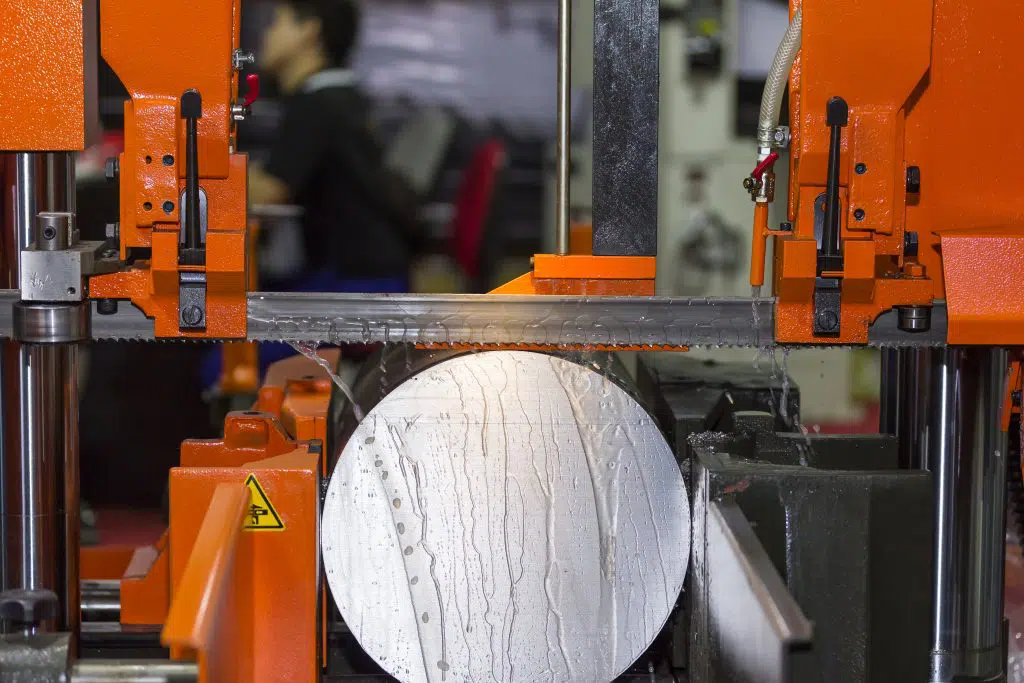
Even the most “normal” cutting operations put an immense amount of pressure on the bandsaw blade that’s doing the cutting. Metal cutting operations take that pressure to the next level. That’s why tougher, more durable metal cutting bandsaw blades like bi-metal and carbide blades are typically used to cut through metal or steel applications. However, no matter the blade or edge type, all metal cutting blades will eventually fail or break just like blades used for less intense applications.

Here are three of the most common reasons behind metal cutting blade breakage.

Bandsaw Misuse

Is your blade properly lubricated to protect against friction? Are you using the right blade or edge type for the type of metal you’re cutting? What is the recommended cutting speed for that particular blade or metal type? These are all questions you or your operator should ask each time you install a new blade on your bandsaw. Fortunately, you can easily negate these issues by thoroughly training all your bandsaw operators.

Improper Blade Tension

The extent to which you tension your metal cutting blades can literally make or break both the blade and your finished product. Over tensioning your blades can lead to hairline cracks along the back edge of the blade and in the gullets of toothed blades. Under tensioning your blades can lead to bowing and premature blade failure.

To combat this, we recommend contacting your bandsaw manufacturer for correct tension settings and measuring blade tension during each installation of a new blade on your bandsaw machinery.

We recently published an entire blog post about the importance of blade tension and the signs of over or under tensioned blades. You may want to check it out if you find yourself frequently encountering this issue.     

Incorrect Number of Teeth Per Inch (TPI)

If you want your blades to last, matching the correct number of teeth per inch to the type of metal you’re cutting is imperative. For example, if you’re cutting thin-walled rectangular tubing with a 10 TPI blade, the teeth will usually straddle the thin section and be stripped relatively quickly. However, if your blade has too few TPI, then there may not be enough room in the tooth gullets to pull out chips as the blade makes its way through the material.

No matter the material, at least three teeth should always be engaged in the work (or in contact with the material). Ideally, your blade will have 6-12 teeth engaged in the work though. If you’re having trouble deciding how many TPI your blades you should have, feel free to reference Simmons’ Recommended Tooth Selection for Material chart. It’ll help you get started.  

While these are some of the most common reasons metal cutting blades break, they are far from the only reasons. Many cutting operations are unique and so too are the issues they may encounter. Being aware of some common reasons behind blade breakage can put you ahead, but you shouldn’t hesitate to reach out to a blade manufacturer like Simmons should you find yourself stumped by a metal cutting issue.

If you found this article helpful, please let us know in the comments. To learn more about metal cutting bandsaw blades, contact us today!
Contactez-nous
Tagged under: pointes de lame, Metal Cutting Blades

What you can read next

A Simmons Butcher bandsaw blade wrapped in orange paper on a stainless steel table.
How to Quickly Uncoil & Unwrap Butcher Blades
Various Simmons' foam cutting blades curve and catch the light against a dark background.
Breaking Down Foam Cutting Blades
A piece of a Scallop bandknife blade is inspected for flaws using advanced machinery.
Identifying Causes of Blade Failure

Catégories

  • À propos de Simmons
  • pointes de lame
  • Nouvelles
  • Simmons fait un don
  • Non classé

Articles récents

  • Simmons Knife & Saw célèbre 80 ans de fabrication de solutions de coupe industrielles

    Glendale Heights, Illinois — [1er avril 2026] Simmons….
  • Lames de scie à ruban SimCut pour boucher : Choisir la bonne lame pour la découpe de viande avec os

    Si votre opération implique la découpe de viande avec os...
  • Lames pour la transformation des aliments : découpe et tranchage de la viande | Guide complet de Simmons

    L'industrie agroalimentaire est l'une des plus importantes...
  • Que peut-on attendre de Simmons en 2026 : maintenir la dynamique et célébrer les étapes importantes ?

    Les deux pieds bien ancrés en 2026, je suis...
  • Bilan de l'année 2025 : une année record pour Simmons

    À l'approche de la fin de l'année 2025, je suis fier de dire ceci...

Simmons' 80th Anniversary Logo

  • INDUSTRIES
  • À PROPOS DE NOUS
  • PRODUITS
  • DEMANDER UN DEVIS
  • ACTUALITÉS ET OPINIONS
  • CONTACTEZ-NOUS

400 Regency Drive, Glendale Heights, IL 60139 |  Courriel : ventes@simcut.com |  Numéro de téléphone : +1 630 912 2880

400 Regency Drive, Glendale Heights, IL 60139
Courriel : ventes@simcut.com
Numéro de téléphone : +1 630 912 2880

©2022 SIMMONS KNIFE & SAW. Tous droits réservés.
Aucune image ne peut être utilisée, reproduite ou transmise sous quelque forme ou par quelque moyen que ce soit sans l'autorisation écrite préalable de Simmons Knife & Saw.

HAUT
fr_FRFrench
en_USEnglish es_MXSpanish it_ITItalian de_DEGerman pt_BRPortuguese (Brazil) pt_PTPortuguese (Portugal) fr_FRFrench