
Simmons Knife & SawSimmons Knife & Saw

  • CASA
  • INDUSTRIE
    • LAME PER IL TAGLIO DELLA SCHIUMA
    • LAME PER TAGLIO CARNE
    • LAME DA TAGLIO PER LA PRODUZIONE
    • LAME PER AFFETTARE IL PANE
    • COLTELLI DA IMBALLAGGIO
    • LAME PER SPACCARE IL CUOIO
    • LAME PER IL TAGLIO DEI METALLI
    • LAME PER IL TAGLIO DEL LEGNO
    • PIÙ LAME DA TAGLIO
  • CHI SIAMO
    • IL NOSTRO TEAM
    • LA NOSTRA STORIA
    • IL VALORE DI SIMMONS
    • SIMMONS WORLDWIDE
    • CARRIERE
    • TERMINI DI VENDITA E ACQUISTO
    • POLITICA SULLA RISERVATEZZA
  • BIGLIETTI
    • LAME APEX
    • LAME B-3
    • LAME BI-METALLICHE M42
    • LAME PER AFFETTARE IL PANE
    • LAME DA MACELLATORE
    • LAME DA MACELLAIO DURASPLIT PER CARCASSE
    • LAME C-DENTALI
    • LAME CON GRANULI IN CARBURO
    • LAME CON PUNTE IN CARBURO
    • LAME CNC
    • LAME LIMATE IN GOLLA
    • LAME FLEXBACK
    • LAME PER ARREDAMENTO
    • LAME PER AFFETTARE IL CIBO
    • LAME RIGIDE
    • LAME A NIDO D'APE
    • LAME DEI COLTELLI – STRETTE
    • LAME DEI COLTELLI – LARGHE
    • LAME DA RAZZORBACK
    • LAME A CAPESANTE
    • COLTELLI PER LA LAVORAZIONE DEI FRUTTI DI MARE
    • SIMCOR® LAME
    • LAME CON INTAGLI SPECIALI
    • LAME PER LA LAVORAZIONE DEI TESSUTI
    • LAME A V
    • LAME ONDULATE
    • LAME IN FILO
    • MOLE ARMOSE E ACCESSORI
    • COLTELLI PER CONFEZIONAMENTO – MACCHINE SIGILLATRICI PER BICCHIERI E VASSOI
    • COLTELLI PER CONFEZIONAMENTO – MACCHINE ORIZZONTALI DI FORMATURA, RIEMPIMENTO E SIGILLATURA
    • COLTELLI PER CONFEZIONAMENTO – MACCHINE PER IL CONFEZIONAMENTO SOTTOVUOTO
    • COLTELLI PER CONFEZIONAMENTO – MACCHINE VERTICALI DI FORMATURA, RIEMPIMENTO E SIGILLATURA
    • COLTELLI PER IMBALLAGGIO – SIGILLATRICI PER SCATOLE
  • RICHIEDI UN PREVENTIVO
  • NOTIZIE E OPINIONI
  • CONTATTACI
    • CONTATTACI
    • NEWSLETTER

3 Reasons Why Metal Cutting Bandsaw Blades Break

di SIMMONS / 23 Maggio 2022 / Pubblicato in Punte della lama

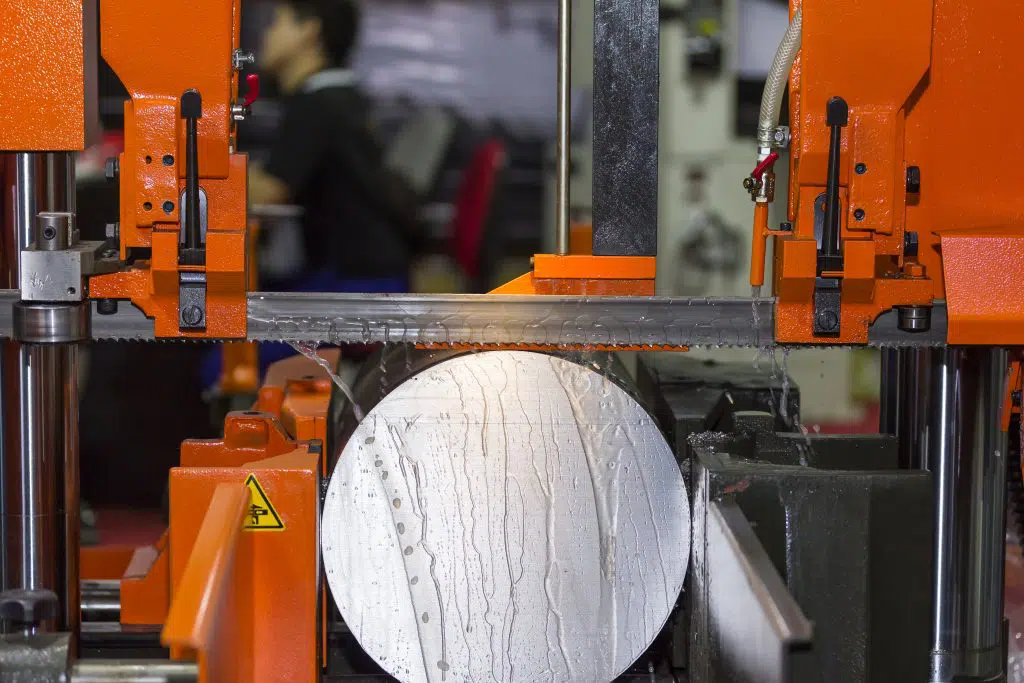
Even the most “normal” cutting operations put an immense amount of pressure on the bandsaw blade that’s doing the cutting. Metal cutting operations take that pressure to the next level. That’s why tougher, more durable metal cutting bandsaw blades like bi-metal and carbide blades are typically used to cut through metal or steel applications. However, no matter the blade or edge type, all metal cutting blades will eventually fail or break just like blades used for less intense applications.

Here are three of the most common reasons behind metal cutting blade breakage.

Bandsaw Misuse

Is your blade properly lubricated to protect against friction? Are you using the right blade or edge type for the type of metal you’re cutting? What is the recommended cutting speed for that particular blade or metal type? These are all questions you or your operator should ask each time you install a new blade on your bandsaw. Fortunately, you can easily negate these issues by thoroughly training all your bandsaw operators.

Improper Blade Tension

The extent to which you tension your metal cutting blades can literally make or break both the blade and your finished product. Over tensioning your blades can lead to hairline cracks along the back edge of the blade and in the gullets of toothed blades. Under tensioning your blades can lead to bowing and premature blade failure.

To combat this, we recommend contacting your bandsaw manufacturer for correct tension settings and measuring blade tension during each installation of a new blade on your bandsaw machinery.

We recently published an entire blog post about the importance of blade tension and the signs of over or under tensioned blades. You may want to check it out if you find yourself frequently encountering this issue.     

Incorrect Number of Teeth Per Inch (TPI)

If you want your blades to last, matching the correct number of teeth per inch to the type of metal you’re cutting is imperative. For example, if you’re cutting thin-walled rectangular tubing with a 10 TPI blade, the teeth will usually straddle the thin section and be stripped relatively quickly. However, if your blade has too few TPI, then there may not be enough room in the tooth gullets to pull out chips as the blade makes its way through the material.

No matter the material, at least three teeth should always be engaged in the work (or in contact with the material). Ideally, your blade will have 6-12 teeth engaged in the work though. If you’re having trouble deciding how many TPI your blades you should have, feel free to reference Simmons’ Recommended Tooth Selection for Material chart. It’ll help you get started.  

While these are some of the most common reasons metal cutting blades break, they are far from the only reasons. Many cutting operations are unique and so too are the issues they may encounter. Being aware of some common reasons behind blade breakage can put you ahead, but you shouldn’t hesitate to reach out to a blade manufacturer like Simmons should you find yourself stumped by a metal cutting issue.

If you found this article helpful, please let us know in the comments. To learn more about metal cutting bandsaw blades, contact us today!

Contattaci
Etichettato sotto: Punte della lama, Metal Cutting Blades

Cosa puoi leggere dopo

A Simmons C-Tooth bandsaw blade at rest in front of a large block of foam.
Explaining Blade Life & Cost Per Cut
The bevel of a Simmons Scallop bandknife blade is highlighted by the background light.
The Importance of Blade Tension
5 things to look for in a bandsaw blade manufacturer.
5 Things to Look for in a Bandsaw Blade Manufacturer

Categorie

  • Informazioni su Simmons
  • Punte della lama
  • Notizia
  • Simmons restituisce alla comunità
  • Non categorizzato

Articoli recenti

  • Simmons Knife & Saw celebra 80 anni di produzione di soluzioni di taglio industriali.

    Glendale Heights, IL — [1 aprile 2026] Simmons ...
  • Lame per seghe a nastro SimCut Butcher: scegliere la lama giusta per il taglio di carne con osso

    Se la tua operazione prevede il taglio di carne con l'osso...
  • Lame per la lavorazione degli alimenti per tagliare e affettare la carne | Guida completa di Simmons

    L'industria della trasformazione alimentare è una delle più grandi...
  • Cosa aspettarsi da Simmons nel 2026: Mantenere lo slancio e celebrare i traguardi raggiunti

    Con entrambi i piedi ormai saldamente piantati nel 2026, io...
  • Riepilogo del 2025: l'anno da record di Simmons.

    Con la fine del 2025 alle porte, sono orgoglioso di poter dire questo...

Simmons' 80th Anniversary Logo

  • INDUSTRIE
  • CHI SIAMO
  • BIGLIETTI
  • RICHIEDI UN PREVENTIVO
  • NOTIZIE E OPINIONI
  • CONTATTACI

400 Regency Drive, Glendale Heights, IL 60139 |  Email: vendite@simcut.com |  Numero di telefono: +1.630.912.2880

400 Regency Drive, Glendale Heights, IL 60139
Email: vendite@simcut.com
Numero di telefono: +1.630.912.2880

©2022 SIMMONS KNIFE & SAW. Tutti i diritti riservati.
Nessuna immagine può essere utilizzata, riprodotta o trasmessa in alcuna forma o con alcun mezzo senza la previa autorizzazione scritta di Simmons Knife & Saw.

SUPERIORE
it_ITItalian
en_USEnglish es_MXSpanish de_DEGerman fr_FRFrench pt_BRPortuguese (Brazil) pt_PTPortuguese (Portugal) it_ITItalian