
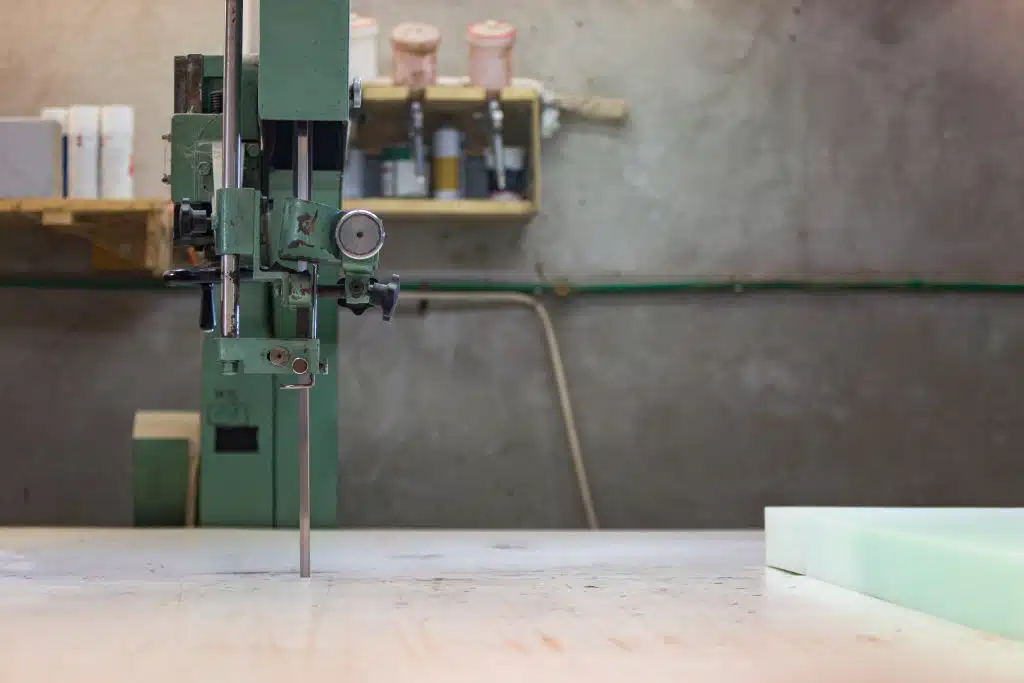
We tend to think of ourselves as blade experts, but when you’ve manufactured bandsaw blades as long as we have, you tend to learn quite a bit about how bandsaw machines work as well. More accurately, you learn a lot about bandsaw maintenance and how to adhere to safety standards so that your blade doesn’t break prematurely, and you don’t injure yourself or another member of your team.
When a blade does break prematurely or there is a bandsaw-related accident on a customer’s production floor, we usually ask them to consider the following tips before sending broken blades back to us for analysis.
Steel Guide Adjustment
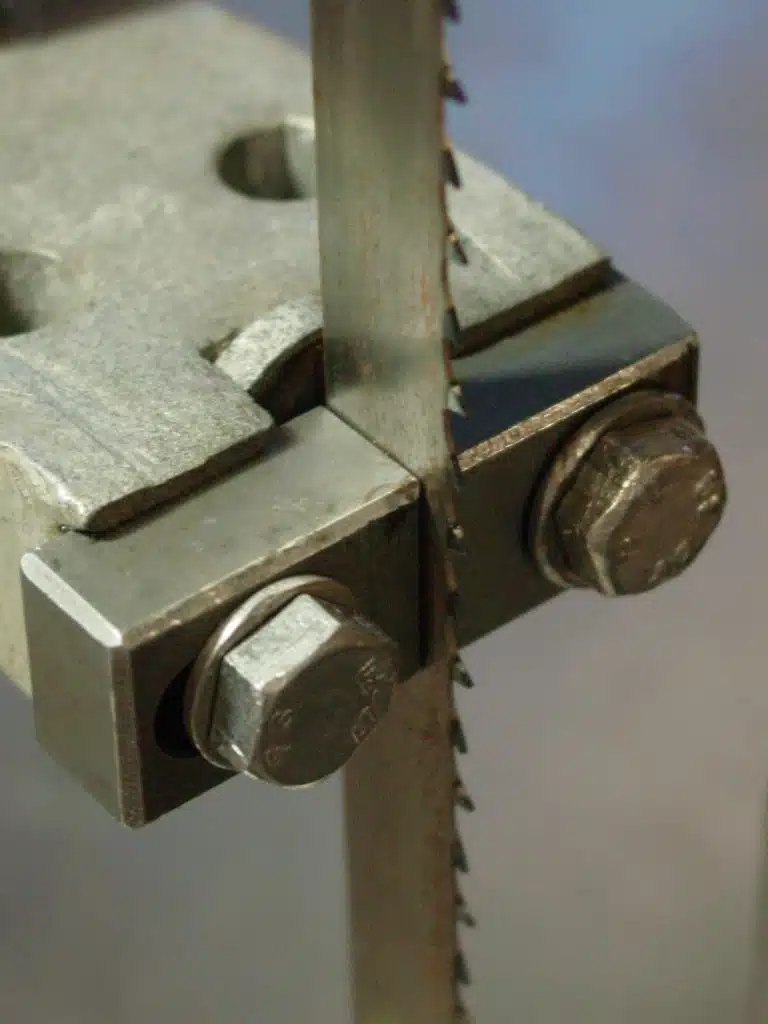
If your blade isn’t providing straight cuts, we recommend checking out the steel blade guides first. While in use, a bandsaw blade must slide through the center of the steel guides. Additionally, the blade’s teeth must never touch the guides. Otherwise, the blade will overheat and lose its sharpness, thereby losing its ability to cut properly.
Back Limiting Screw
Once you’ve checked on the steel blade guides, the next component you should turn your attention to is the back limiting screw. You should ensure the back limiting screw is in good condition on a regular basis. At the same time, you should also check that it is properly adjusted to prevent the blade’s teeth from rubbing against the steel guides, which will damage the teeth and cause uneven cuts or blade failure due to fatigue.
Blade Placement
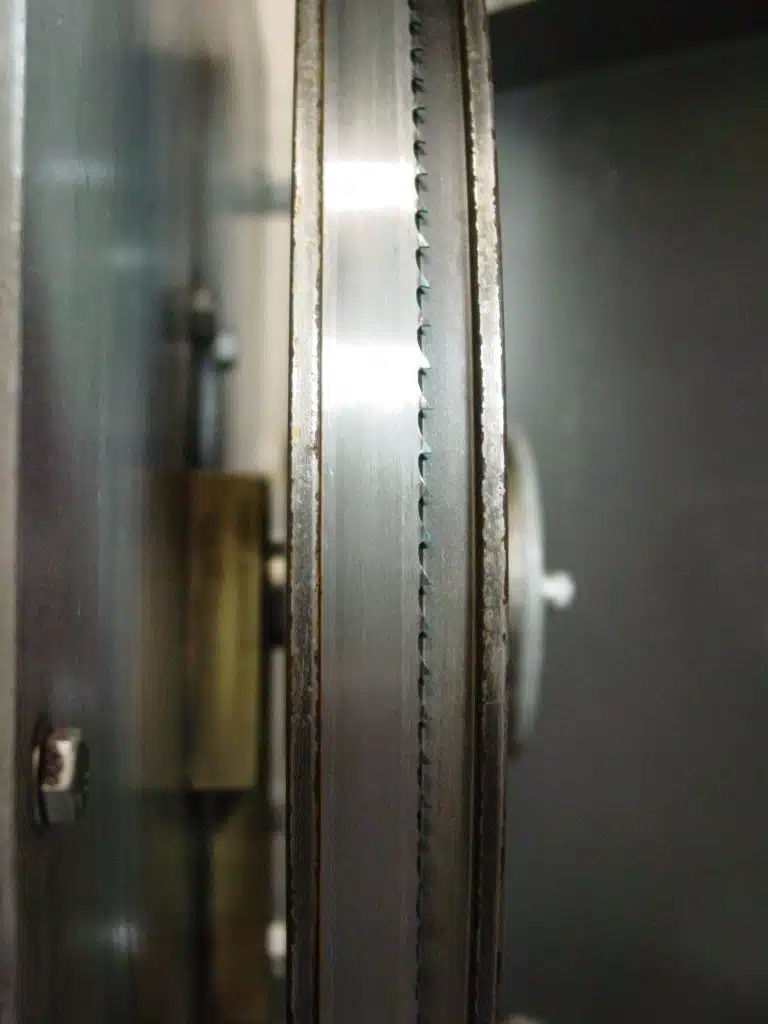
When installing a new bandsaw blade, the back of the blade must not touch the pulley flange. If the blade and flange are touching, the friction will cause the blade to fatigue and fail prematurely. To avoid this, we typically recommend there to be about 1/16” between the pulley flange and the back edge of the blade. You can adjust the amount of space between the two components by moving the leveling adjustment until you reach the desired measurement.
Be careful not to leave too much space between the blade and the pulley flange though. If they are too far apart, the blade could easily pop off the wheels.
Blade Tension
Proper blade tensioning is essential to any successful cutting operation. Basically, over-tensioning you’re your blade is just as bad as under-tensioning. Both can result in uneven cuts and shortened blade life. For best cutting results, you should refer to the machine manufacturer’s instructions for proper tensioning or use a tension meter.
We published a detailed blog post about the importance of blade tension last year. You can check it out Qui.
Maintain Tabletop Guides
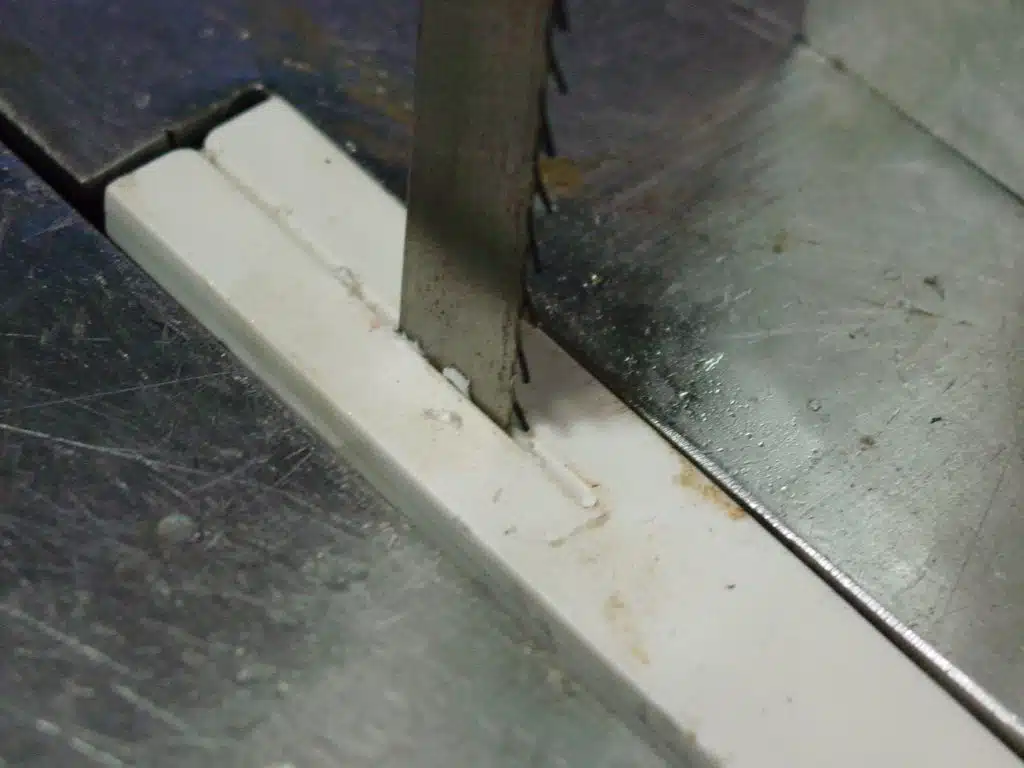
It is almost impossible to overstress the importance of maintaining the condition of a bandsaw’s tabletop guides. Not only is it a basic safety measure, but it’s also critical to assure straight cuts of your product. If your bandsaw is missing tabletop guides or they’re in poor condition, then you should install new tabletop guides immediately.
Scrapers/Guide Cleaners
You should always keep the bandsaw wheel’s tracks clean by maintaining and/or replacing its scrapers or guide cleaners. When scrapers or guide cleaners start to accumulate waste, it’s usually an indicator that it’s time for a replacement.
If the bandsaw wheel’s tracks are not clean, the bandsaw blade could jump off its wheels, causing immediate damage to the blade or even possible personal injury.
When it comes down to it, bandsaws are incredibly complicated machines. If you work with them frequently enough, it’s likely you’ll encounter an issue that regular bandsaw maintenance doesn’t cover. In those instances, a blade manufacturer like Simmons may be able to point you in the right direction. However, if you want to be sure that you’re receiving proper guidance from the start, we recommend reaching out to the bandsaw’s original manufacturer first.
Want to learn more about bandsaw maintenance and safety? Contact Simmons today!

 Italian
  English
  Spanish
  German
  French
  Portuguese (Brazil)
  Portuguese (Portugal)