Simmons Knife & SawSimmons Knife & Saw

  • HEIM
  • Branchen
    • Schaumstoffschneidklingen
    • Fleischschneidemesser
    • Schneidklingen herstellen
    • BROTSCHNEIDEKLINGEN
    • Verpackungsmesser
    • LEDERSPALTEN
    • Metallschneidklingen
    • HOLZSCHNEIDMESSER
    • MEHR SCHNEIDKLINGEN
  • ÜBER UNS
    • UNSER TEAM
    • UNSERE GESCHICHTE
    • DER WERT VON SIMMONS
    • SIMMONS WELTWEIT
    • KARRIERE
    • VERKAUFS- UND KAUFBEDINGUNGEN
    • DATENSCHUTZRICHTLINIE
  • PRODUKTE
    • APEX-KLINGEN
    • B-3 SCHWARZE
    • M42-BIMETALL-SCHILDER
    • BROTSCHNEIDEKLINGEN
    • Metzgermesser
    • Metzger Durasplit Carcass Blades
    • C-ZAHNMESSER
    • Hartmetallklingen
    • Hartmetallbestückte Klingen
    • CNC-MESSER
    • In den Schlund gefeilte Klingen
    • FLEXBACK-BLÄTTER
    • MÖBELBÄNDER
    • Schneidemesser für Lebensmittel
    • HARDBACK-KLINGEN
    • Wabenförmige Klingen
    • MESSERKLINGEN – SCHMAL
    • MESSERKLINGEN – BREIT
    • Rasiermesserscharfe Klingen
    • Jakobsmuschelblätter
    • MEER ZUR MEERESFRÜCHTEVERARBEITUNG
    • SIMCOR® KLINGEN
    • SPEZIALKARTENKLINGEN
    • GEWEBEVERARBEITUNGSKLINGEN
    • V-förmige Klingen
    • WELLENBLÄTTER
    • DRAHTBLÄTTER
    • Schleifscheiben und Zubehör
    • Verpackungsmesser – Becher- und Schalenverschließmaschinen
    • Verpackungsmesser – Horizontale Form-, Abfüll- und Verschließmaschinen
    • Verpackungsmesser – Vakuumverpackungsmaschinen
    • Verpackungsmesser – Vertikale Form-, Füll- und Verschließmaschinen
    • Verpackungsmesser – Kartonverschließer
  • ANGEBOT ANFORDERN
  • NACHRICHTEN & MEINUNGEN
  • KONTAKT
    • KONTAKT
    • NEWSLETTER

The Benefits of Heat Treating Your Bandsaw Blades

von SIMMONS / 31 Juli 2024 / Published in Klingenspitzen

Ever wonder how to make your blades last longer and perform better? The answer lies in a key step of the manufacturing process: heat treating.

Why Heat Treating Matters

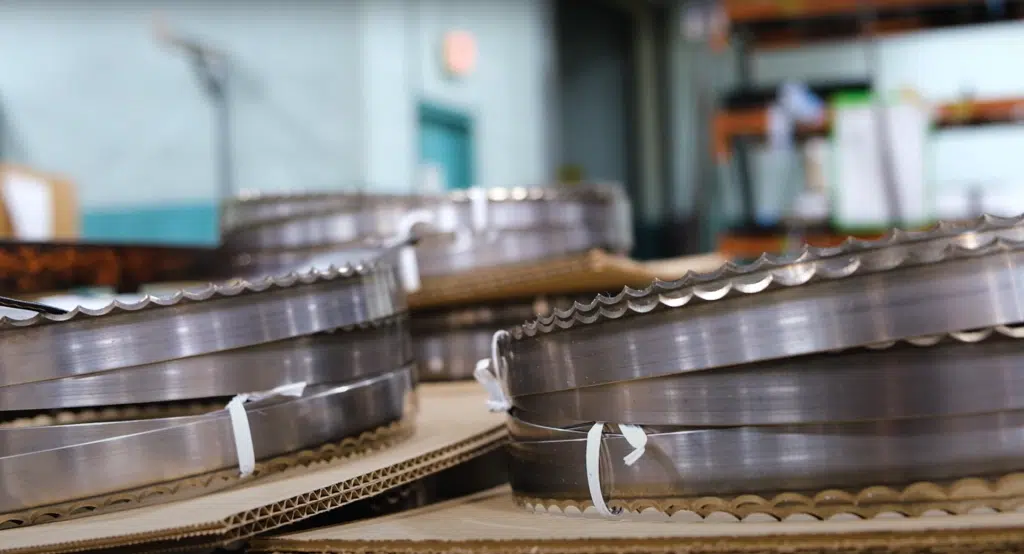
When we talk about heat-treating bandsaw blades, we’re not referring to the entire blade. Heat treatment usually targets the edge or teeth of a blade. This increases the hardness of the blade’s edge, making it sharper and extending its useful life. Essentially, heat-treating helps your blades retain their cutting edge, so your blades stay sharper longer, even after heavy use.

When to Heat Treat Your Blades

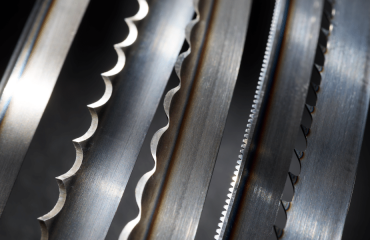
Depending on their intended use, we heat treat many of our blade types, including C-Tooth, CNC, Razorback, Scallop, V-Tooth, and Wavy blades. The degree of hardness we aim for—and where we apply it—depends on the blade’s intended use. For instance, Hardback blades are typically heat-treated on both the teeth and the backer of the blade. This increases beam strength, making Hardback blades perfect for cutting non-ferrous metals like brass, lead, and bronze. In contrast, Flexback blades are heat-treated only on the teeth. This keeps the backer flexible, which is ideal for contour cutting or working with comparatively softer materials like plastic and wood.

We typically recommend heat-treating blades that are going to be used to cut through abrasive applications like rough foams, scouring pads, sandpaper sponges, and fiberglass. Tough materials like these can quickly wear down a blade, but with heat treating, you’ll notice a big difference in longevity. That means you won’t have to replace your blades as often, which will reduce your machine downtime and keep your operations running smoothly.

Striking A Balance

The goal of heat-treating is to harden the teeth or edge of the blade while maintaining flexibility in the body. But there’s a balance—too much heat treating, and the blade becomes brittle rather than strong. That’s why we carefully control the process to ensure you get a blade that fits your needs.

The Bottom Line

Heat treatment can be a game-changer when it comes to extending the life of your blades. Whether you’re cutting through abrasive materials or looking for a blade that can handle precision tasks, heat treating your blades will ensure they stay sharper and last longer.

Want to see if heat-treating your blades is the right move for your cutting operations? Contact us today!
Kontaktieren Sie uns
Tagged under: Klingenspitzen

What you can read next

Simmons' Food Processing Blades
Messer für die Fleischverarbeitung zum Schneiden und Tranchieren | Simmons' umfassender Leitfaden
Layers of Wide Knife Edge bandknife blades hang on Simmons' production floor.
How to Determine Blade Life
Assorted packaging knives
A Guide to Simmons’ Packaging Knives

Kategorien

  • Über Simmons
  • Klingenspitzen
  • Nachricht
  • Simmons gibt zurück
  • Nicht kategorisiert

Neueste Beiträge

  • Simmons Knife & Saw feiert 80 Jahre Herstellung industrieller Schneidlösungen

    Glendale Heights, IL — [1. April 2026] Simmons ...
  • SimCut Bandsägeblätter für die Fleischverarbeitung: Die Wahl des richtigen Sägeblatts für das Schneiden von Fleisch mit Knochen

    Wenn Ihr Betrieb das Zerteilen von Fleisch mit Knochen beinhaltet...
  • Messer für die Fleischverarbeitung zum Schneiden und Tranchieren | Simmons' umfassender Leitfaden

    Die Lebensmittelverarbeitungsindustrie ist eine der größten...
  • Was Sie von Simmons im Jahr 2026 erwarten können: Den Schwung beibehalten und Meilensteine feiern

    Nachdem ich nun mit beiden Beinen fest im Jahr 2026 stehe, bin ich...
  • Jahresrückblick 2025: Simmons' Rekordjahr

    Zum Jahresende 2025 kann ich mit Stolz sagen:.

Simmons' 80th Anniversary Logo

  • Branchen
  • ÜBER UNS
  • PRODUKTE
  • ANGEBOT ANFORDERN
  • NACHRICHTEN & MEINUNGEN
  • KONTAKT

400 Regency Drive, Glendale Heights, IL 60139 |  E-Mail: Vertrieb@simcut.com |  Telefonnummer: +1.630.912.2880

400 Regency Drive, Glendale Heights, IL 60139
E-Mail: Vertrieb@simcut.com
Telefonnummer: +1.630.912.2880

©2022 SIMMONS KNIFE & SAW. Alle Rechte vorbehalten.
Ohne vorherige schriftliche Genehmigung von Simmons Knife & Saw dürfen keine Bilder in irgendeiner Form oder mit irgendwelchen Mitteln verwendet, reproduziert oder übertragen werden.

SPITZE
de_DEGerman
en_USEnglish es_MXSpanish it_ITItalian fr_FRFrench pt_BRPortuguese (Brazil) pt_PTPortuguese (Portugal) de_DEGerman